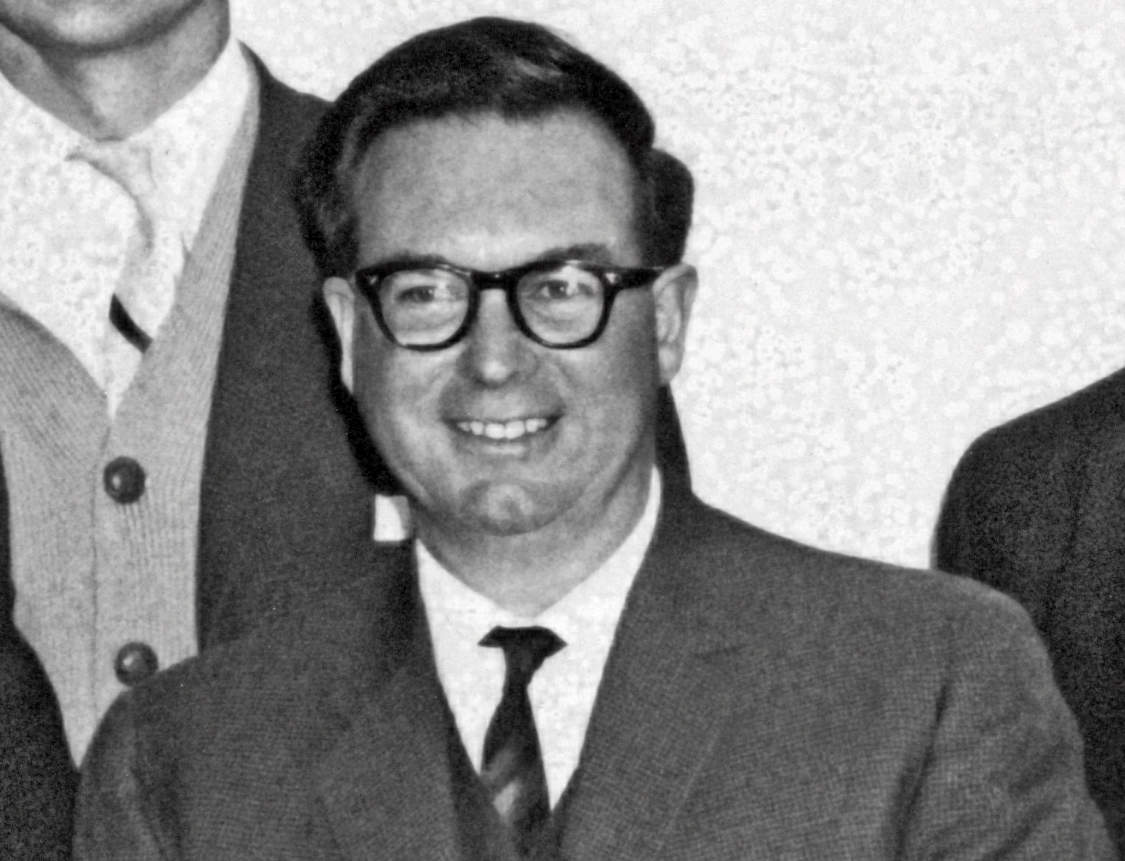
David “Jeff” Newnham
1926 – 2026
Tidbinbilla
|
Jeff Newnham at Tidbinbilla Tracking Station, circa 1968. |
The text below is drawn largely from the eulogy given at Jeff’s funeral (with much thanks to Jeff’s family) and some additional material.
______
Jeff’s interest in radio started when he was about seven, and living with his grandparents in Penzance. While listening to a wireless radio, Jeff asked his grandmother how the voices got to be in the radio, and she said that they came across the air. That piqued his lifelong interest in radio.
As a teenager Jeff joined the UK Air Training Corps, then the RAF, where his air crew trade was listed on his Discharge Certificate as Electrician ‘A’.
After the war he studied at the University of London and gained a degree with majors in mathematics, general physics and nuclear physics.
It was about that time when he met Wendy.
After university he worked on projects that were covered under the Official Secrets Act.
In 1956, the Australian Weapons Research Establishment (WRE) brought Jeff and his wife Wendy to South Australia. Jeff worked at Woomera and Maralinga for WRE until 1963 when he commenced work in Canberra with Spacetrack, a NASA contractor.
According to Jeff’s diaries, some highlights his working life after WRE include:
In mid-1963, together with a colleague, “checked out various sites for radio noise from Canberra” with the current Tidbinbilla site being chosen.
 |
At the proposed Tidbinbilla site – 7 August 1963. The photo shows Keith Brockelsby (right) and Jeff Newnham operating a sensitive S-Band JPL receiver at the proposed Tidbinbilla site, measuring isolation at S band from an S band transmitter in Canberra. With thanks to Jeff Newnham for the photo and text. |
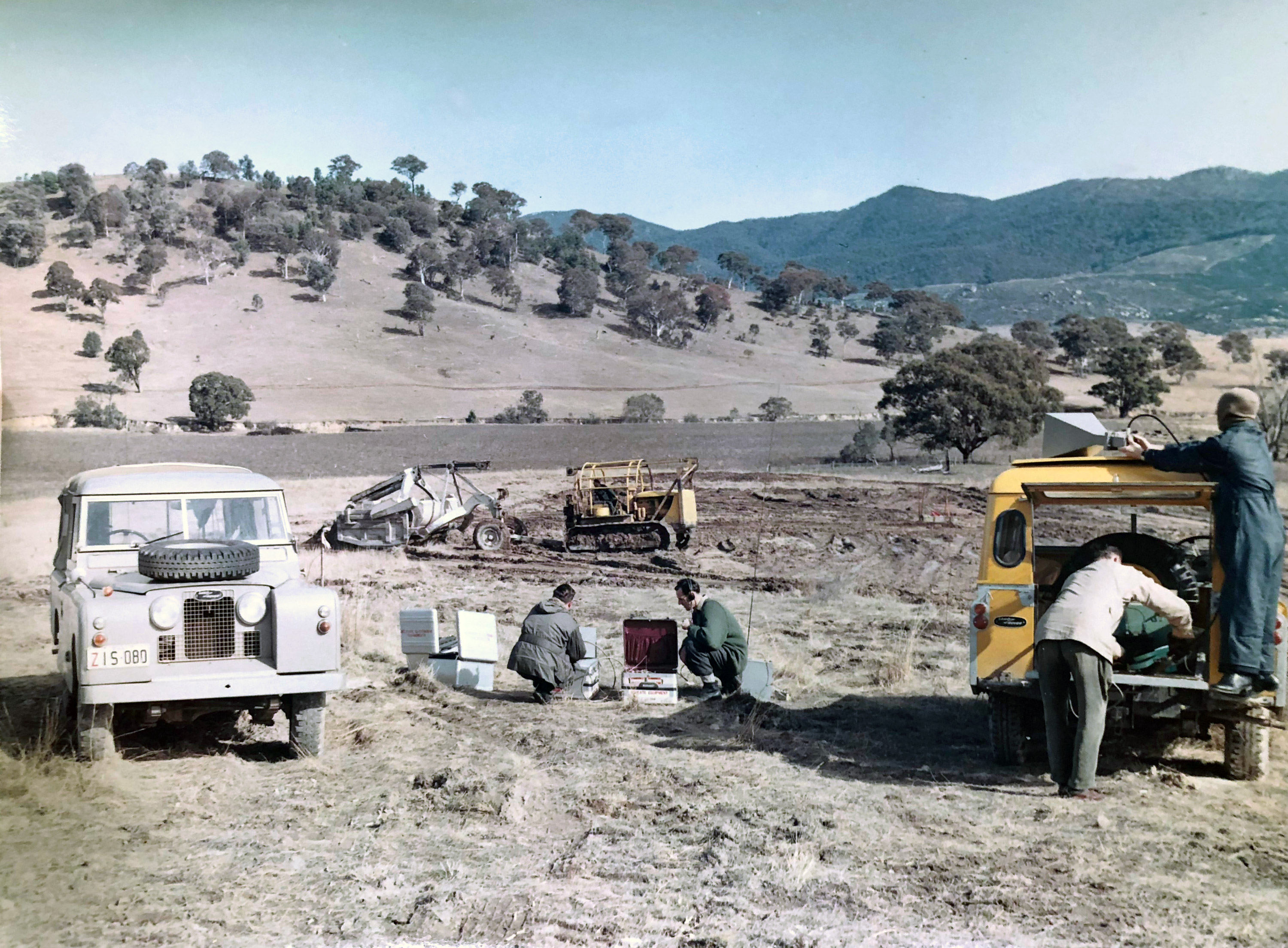 |
Keith Brocklesby adds, “Jeff Newnham and I carried out RF attenuation measurements on the proposed antenna site to ensure that radio noise from Canberra City would not pose a problem. [Most of the time] our only companions were a few grazing sheep!” Photo: Tidbinbilla archives. Copy by Colin Mackellar. |
In late 1963, Jeff went to America for training, first at the NASA’s Jet Propulsion Laboratory in Pasadena, and later at Goldstone Tracking Station near Barstow in the Mojave Desert. Wendy and son Michael joining him in Barstow.
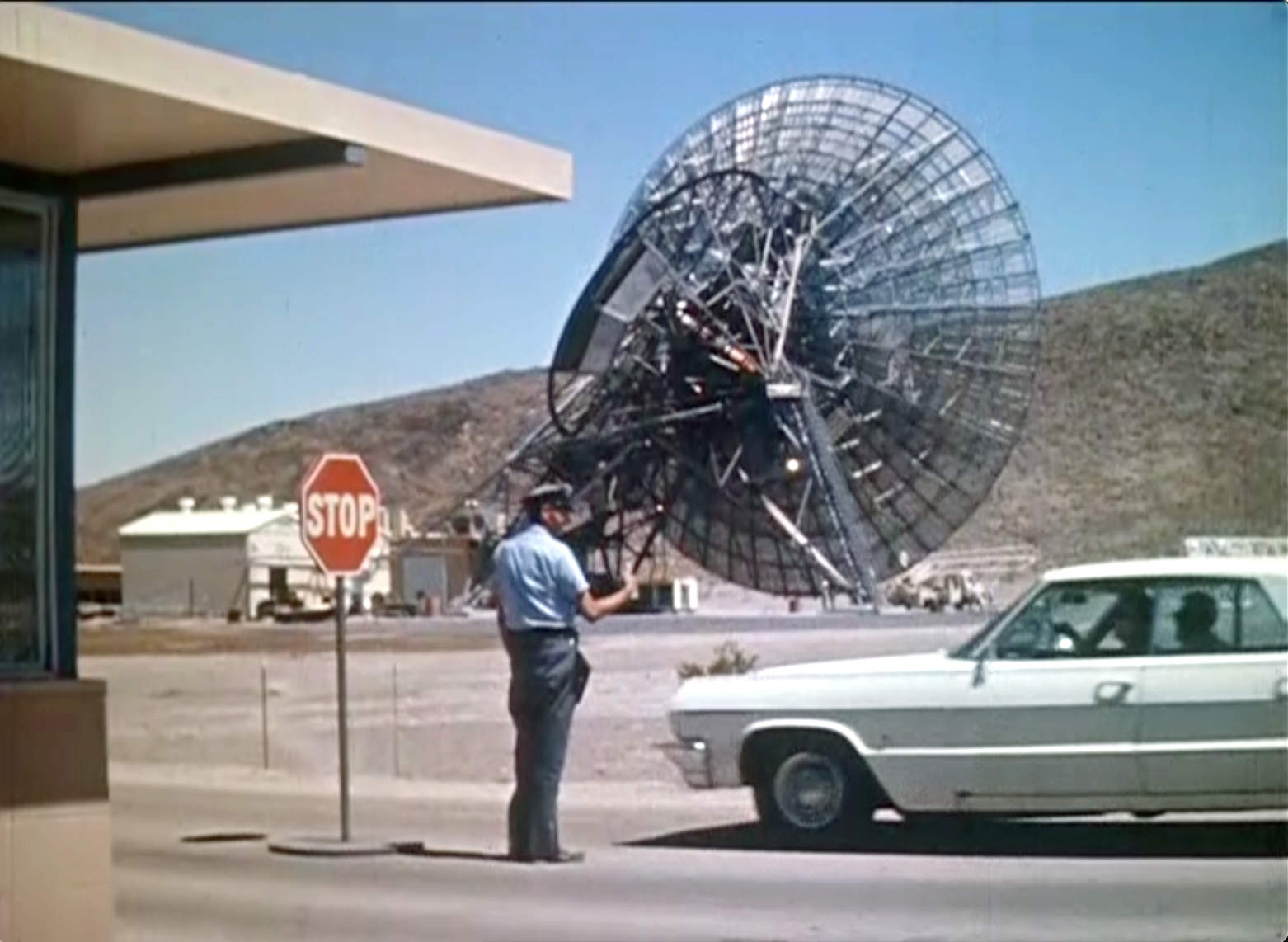 |
Part of the Australian contingent enters Goldstone’s Pioneer tracking station in this frame from the Australian Department of Supply’s film Partners in Space. In late 1963 and 1964, the team from Tidbinbilla spent months at JPL and Goldstone learning and accepting the equipment they would reassemble at Tidbinbilla to become DSIF41. |
Jeff and family returned to Australia in late 1964 and settled in Canberra where Tidbinbilla Tracking Station was getting ready to become operational. Jeff’s first position was as Analog Instrumentation engineer, eventually becoming the Head of the Analog Instrumentation Section.
An entry in Jeff’s diary stated:
“The first spacecraft that we tracked was Mariner 4, the first spacecraft to successfully fly close to Mars and take good photos. I was in the control room at Tidbinbilla when the photos were received, very slowly, (in digital form at about 8 bits/second!).”
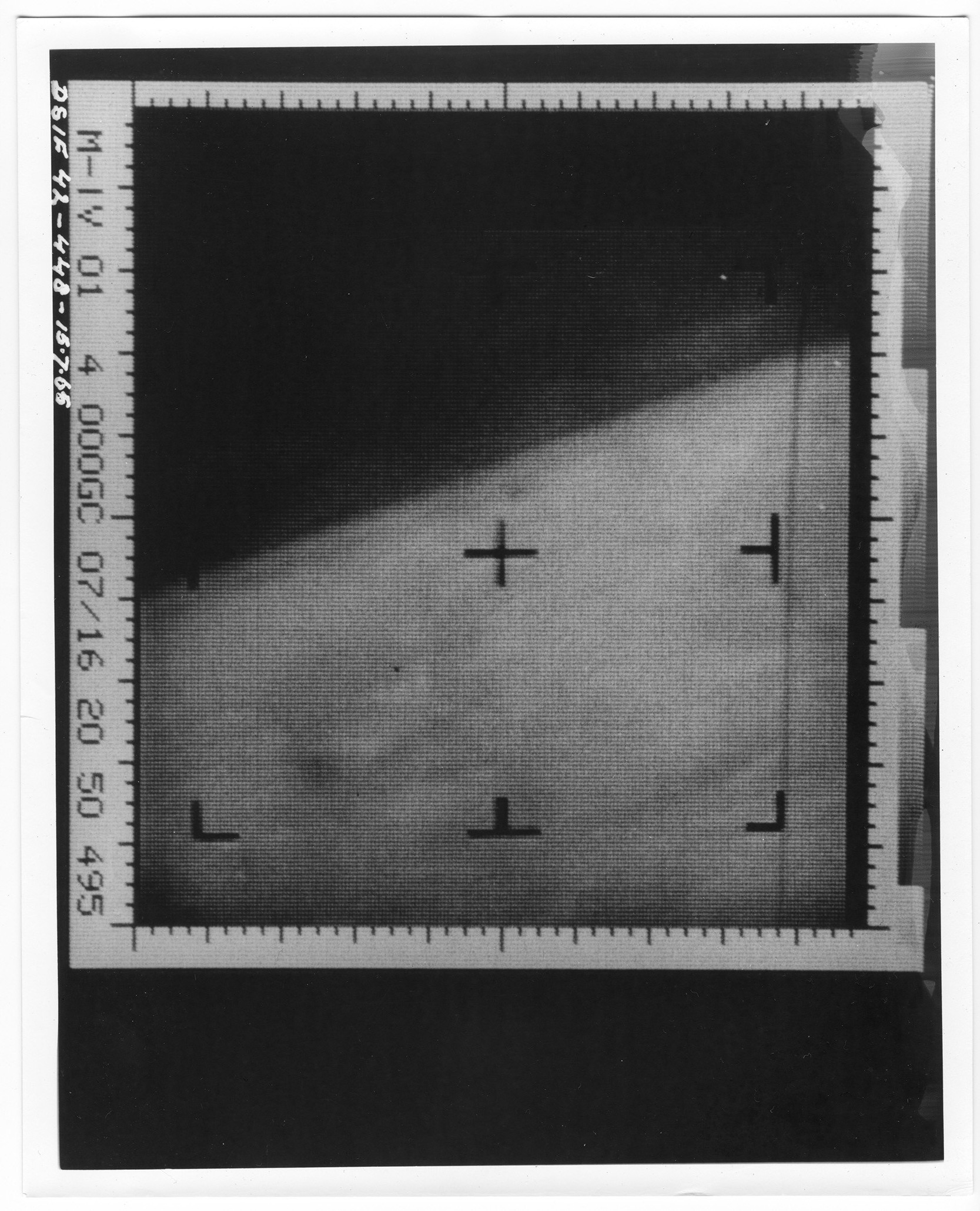 |
The first ever close up image of Mars – from Mariner IV. Preserved by Les Whaley. Scan by Colin Mackellar. |
 |
Jeff and son Michael at Tidbinbilla in 1967. |
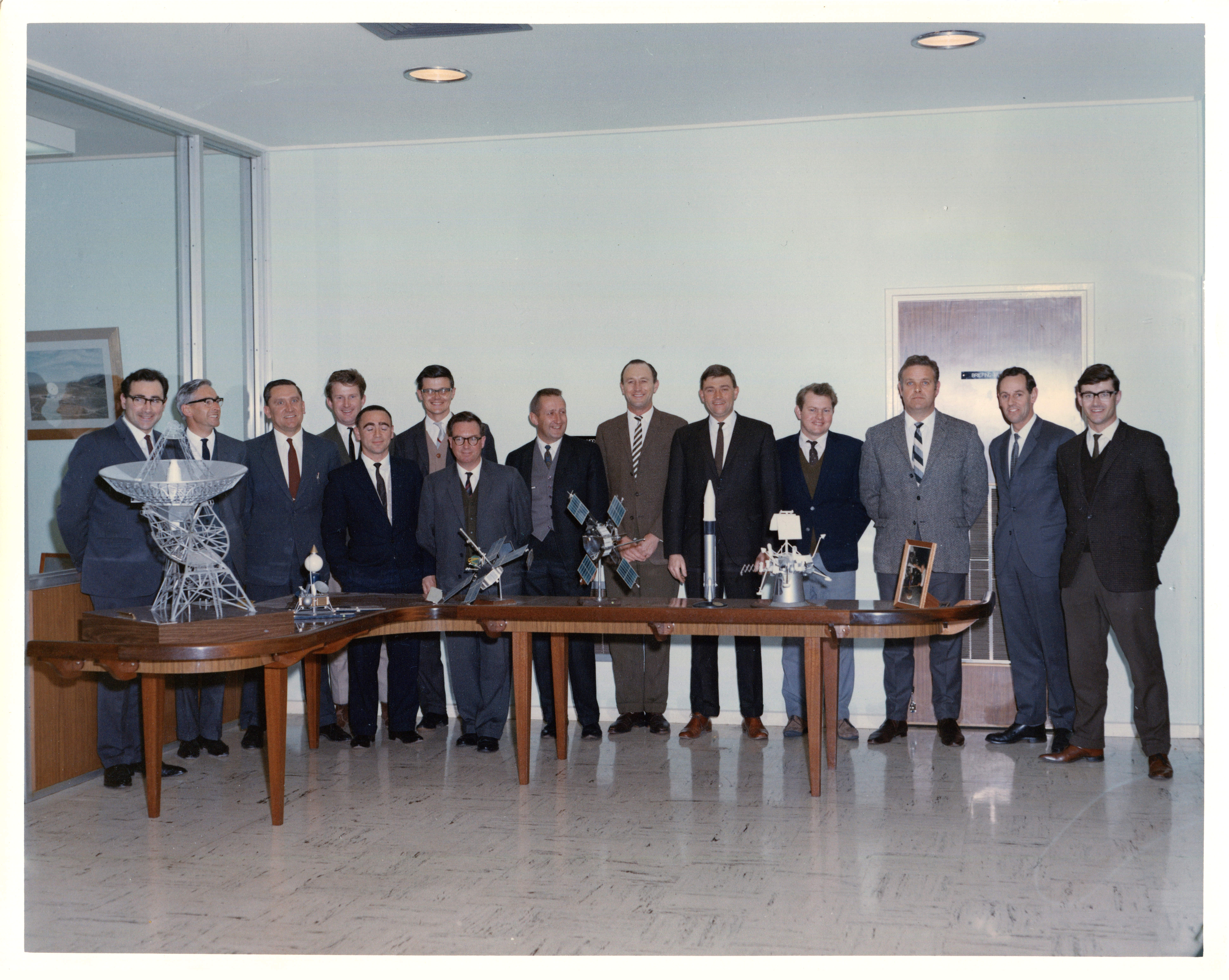 |
This photo, apparently shopwing the Tidbinbilla Field Engineering Staff, was taken around July 1968. From left: Roy Stewart – Digital Systems Engineer; Thanks to Mike Dinn, Bruce Window and John Heath for the names. From the Tidbinbilla archives. Scanned by Glen Nagle. |
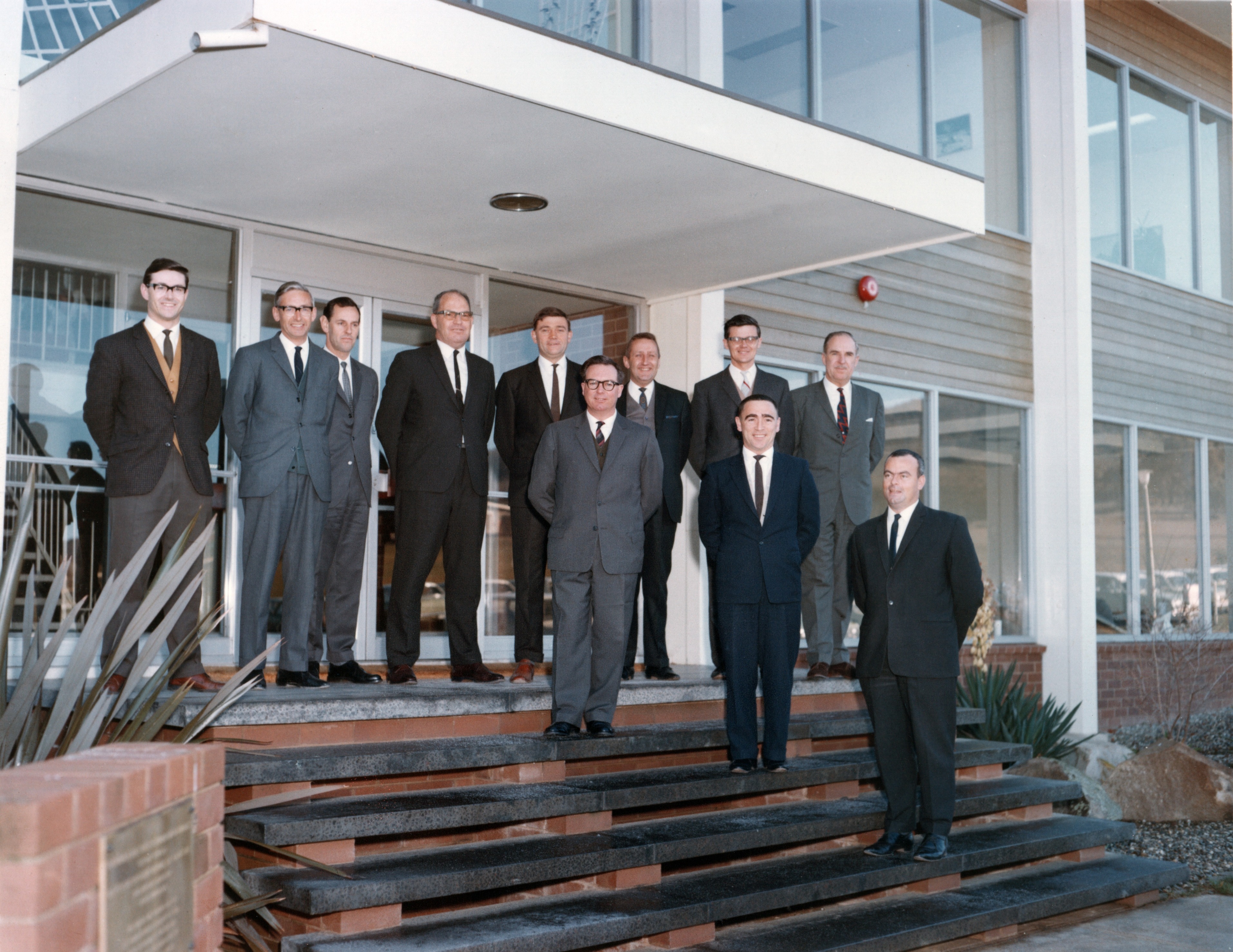 |
Tidbinbilla senior staff, probably July 1968. Back row from left – Front row from left – Preserved by Clive Jones, scan by Colin Mackellar. |
In 1969, Jeff was sent to Parkes to help install new equipment and set up the CSIRO Parkes dish to enable it to decode signals from Apollo 11.
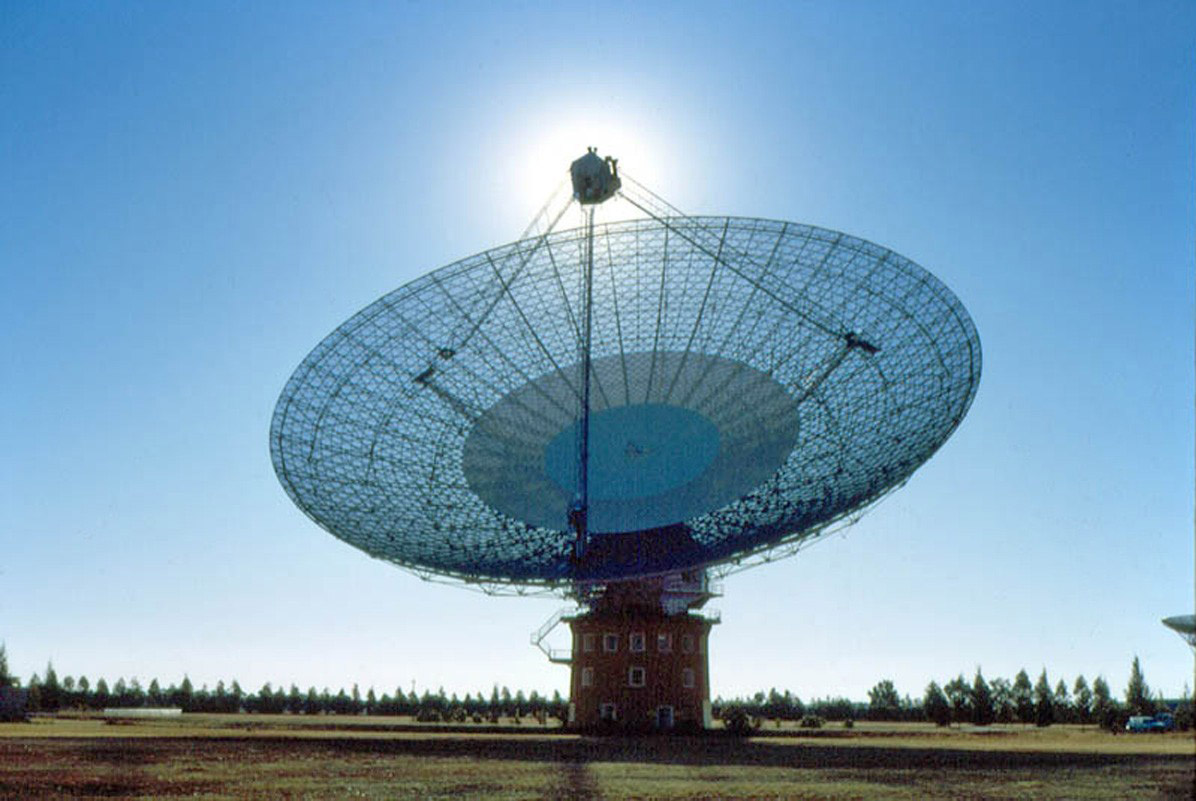 |
The Parkes Radio Telescope during the Apollo Program. Photo by Keith Aldworth. |
For his work with the Apollo 11 mission, he was presented with a medallion made from components of spacecraft Eagle which landed on the lunar surface, and Columbia which remained in lunar orbit.
 |
Apollo 11 folder – front cover. |
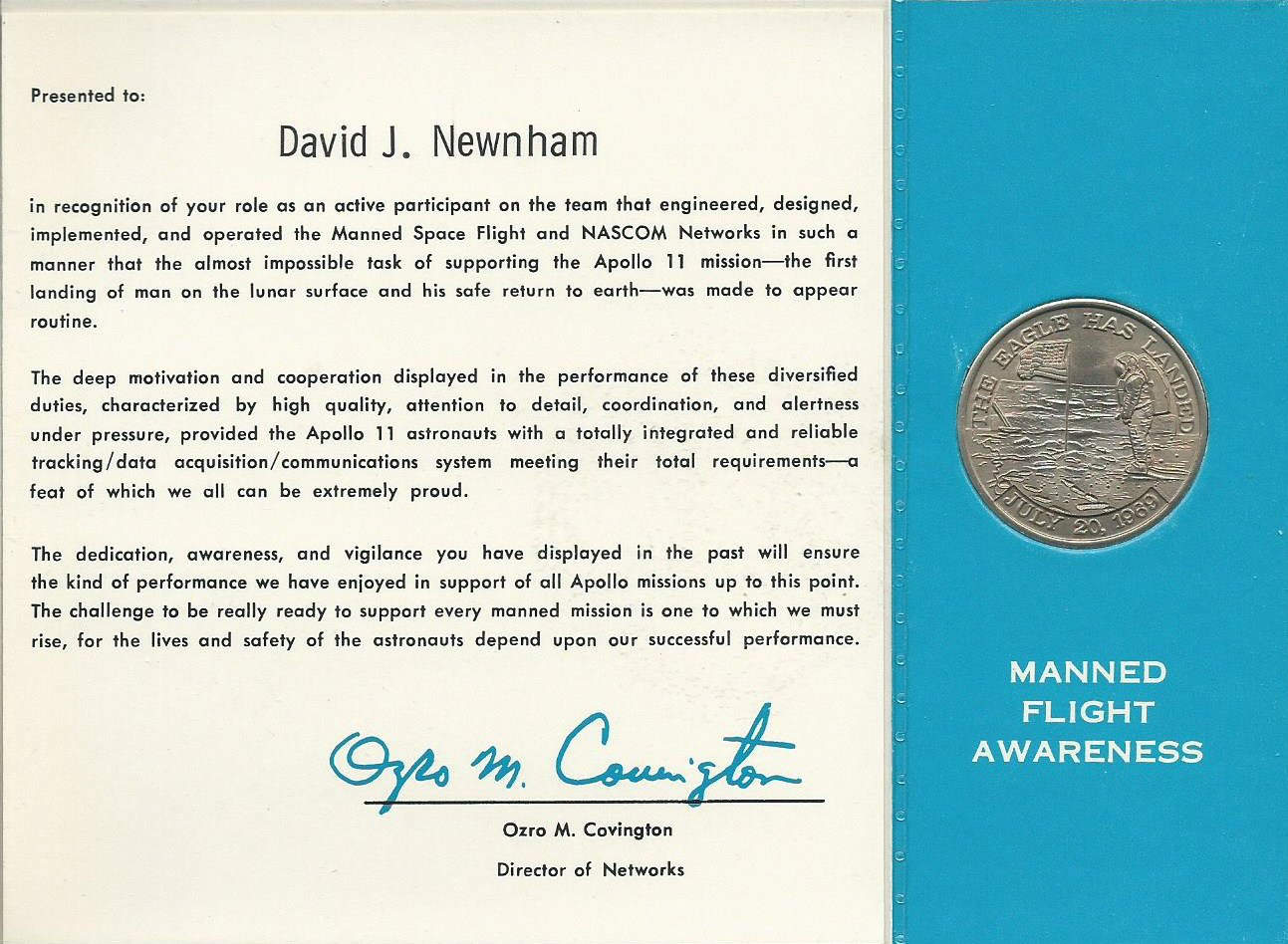 |
Apollo 11 folder – inside front. |
 |
Apollo 11 folder – inside back. |
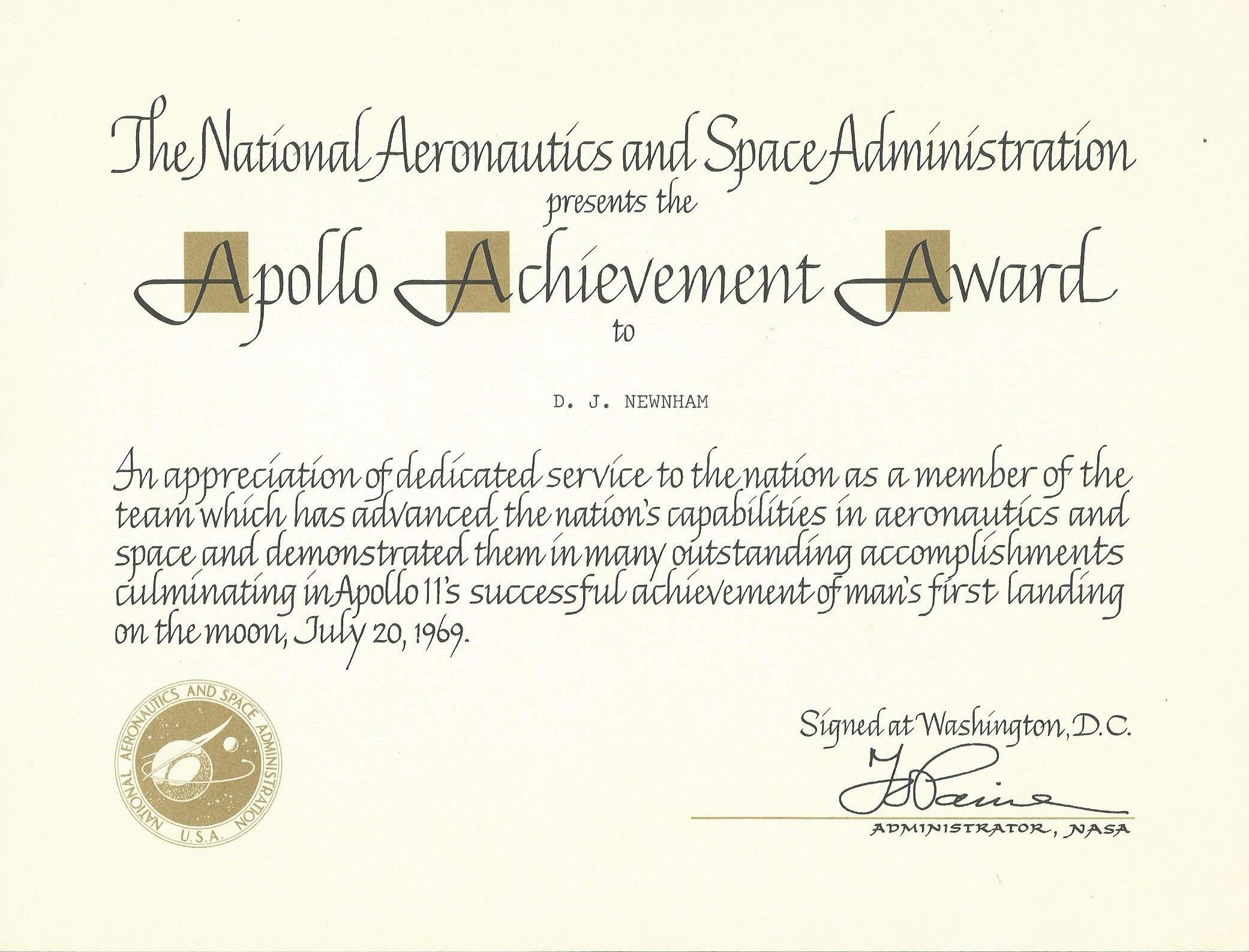 |
Apollo 11 certificate. |
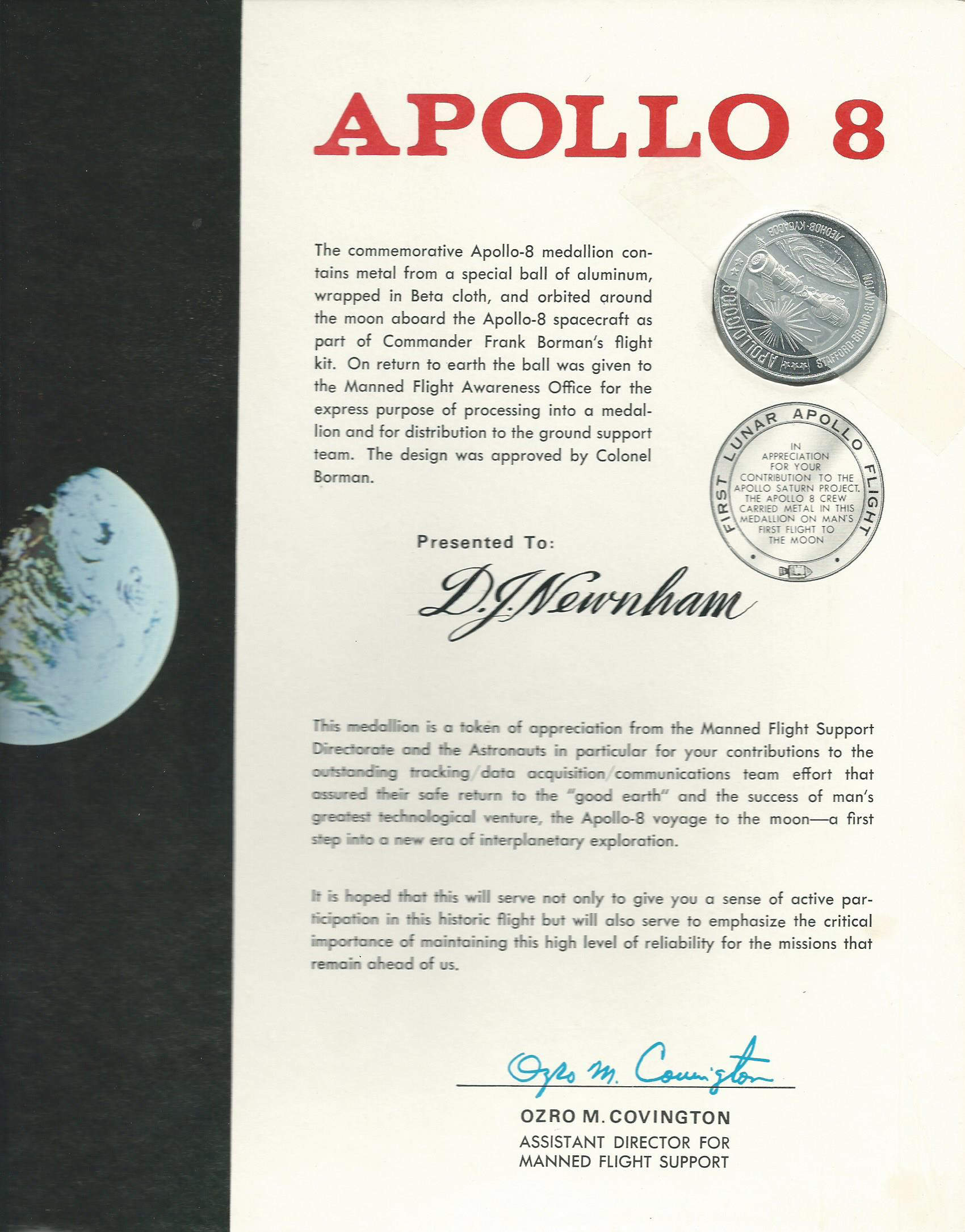 |
Apollo 8 certificate. |
Among the many certificates and medallions he received for working on major space projects such as the Apollo 8 lunar orbit mission, the Apollo 11 and later moon landings, Pioneer and Surveyor missions, he was also awarded certificates of appreciation in 1975 for his role in the Apollo/Soyuz collaborative project.
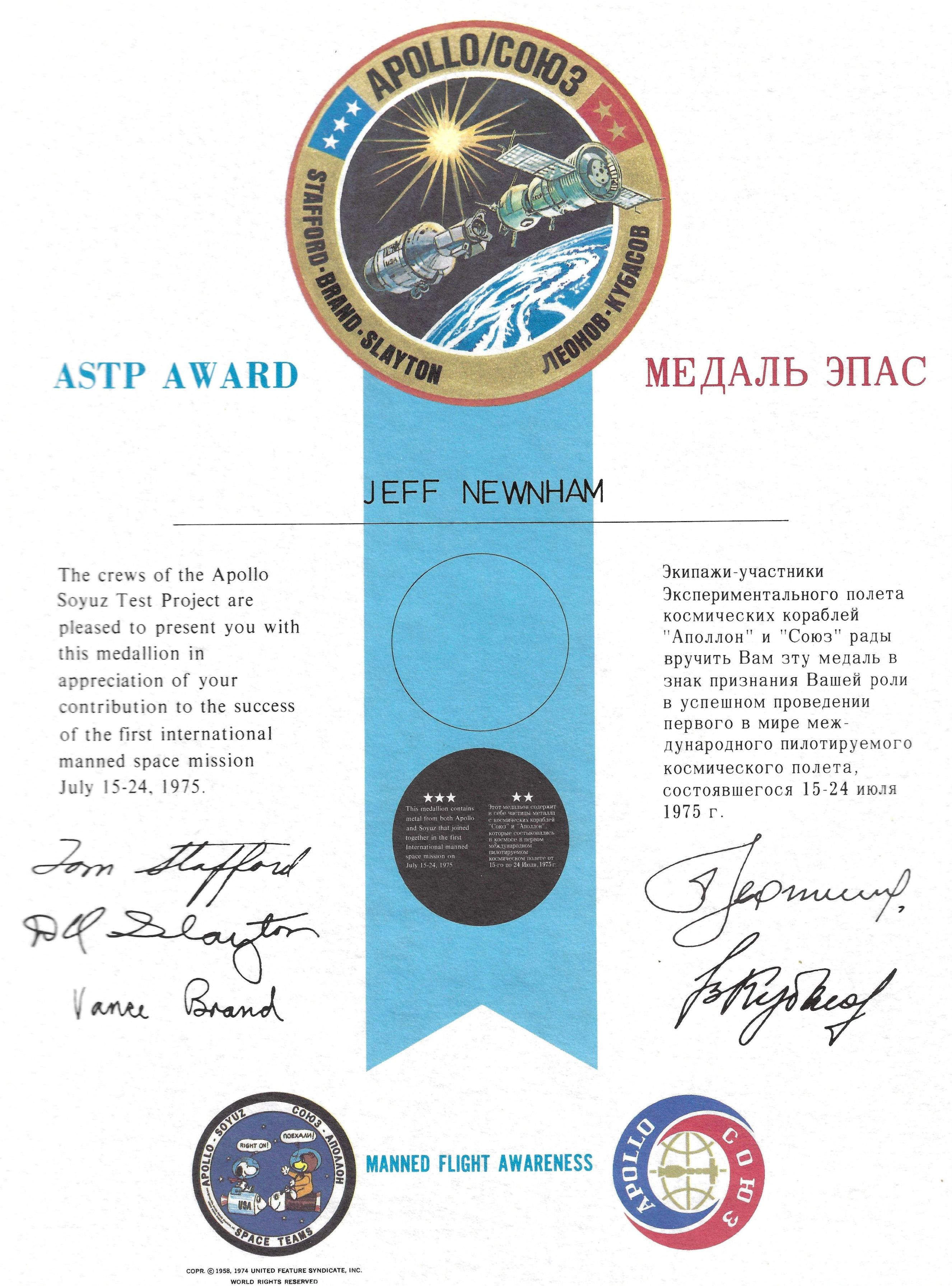 |
Apollo Soyuz Test Project certifcate. |
After leaving Tidbinbilla in the mid-1970s, Jeff joined the Commonwealth Department of Science.
In his career in the Australian Public Service Jeff had several positions. He was the Station Director of the Australian Balloon Launch Station, he managed the balloon launches for upper atmosphere research at Mildura in Victoria, and Alice Springs in the Northern Territory.
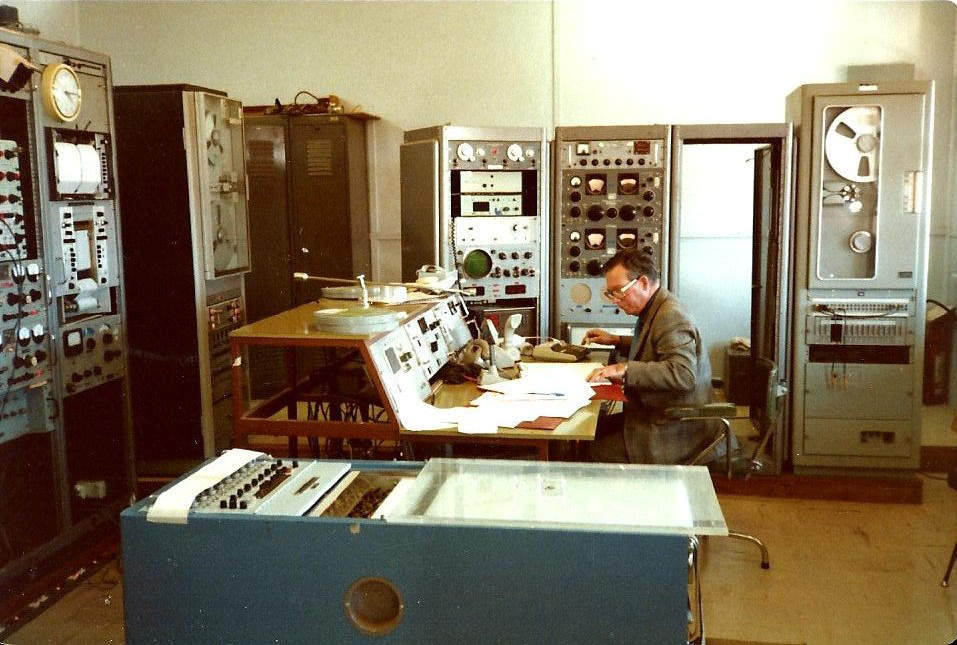 |
1980 – Jeff as Director of the Upper Atmosphere Research Balloon Launch Station which had sites at Mildura and Alice Springs. |
 |
1980s – Balloon filling prior to launch. |
 |
Balloon launching from Mildura was featured on the cover of Scodos, the magazine of the Department of Supply, in December 1974. This was taken a little before Jeff took on the role at the Australian Balloon Launch Station. Preserved by Hamish Lindsay. Scan by Colin Mackellar. |
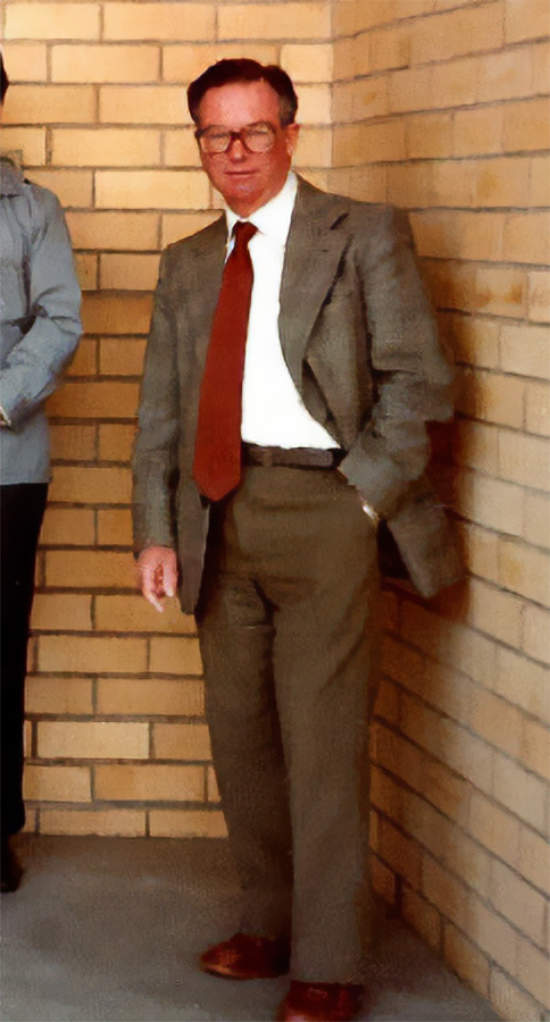 |
Jeff in Mildura at the Head Office. |
For a while he worked in Orroral Valley – almost certainly at the Department of Communications Satellite Monitoring Station in the late 1980s. (See the link.)
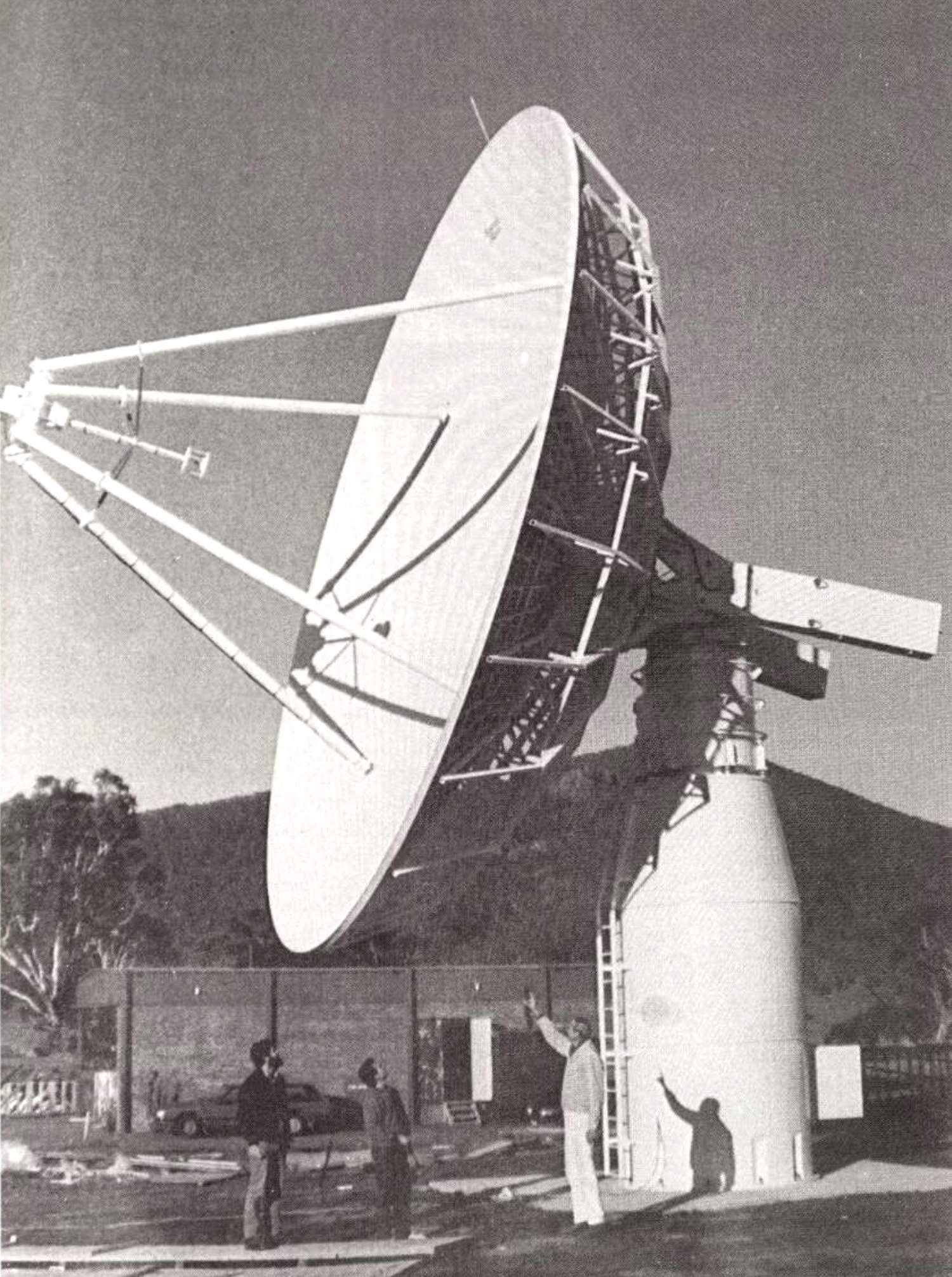 |
This photo of the 10 metre antenna at the Orroral Valley Satellite Monitoring Station was found in the Department of Transport and Communications Annual Report for 1987-88 by Garry Brooke. |
Jeff finally ending up as a Manager at the Communications Laboratory in Mitchell, ACT. His section was working on digital audio broadcasting, that is digital radio.
Formally retiring at 65, Jeff worked as a private consultant on projects for many years with a private company, KITComm, developing satellite digital communication systems.
He also consulted with the CSIRO on AUSSAT; and with UNESCO providing international training in radio spectrum management.
In the Maldives he drafted their telecommunication legislation.
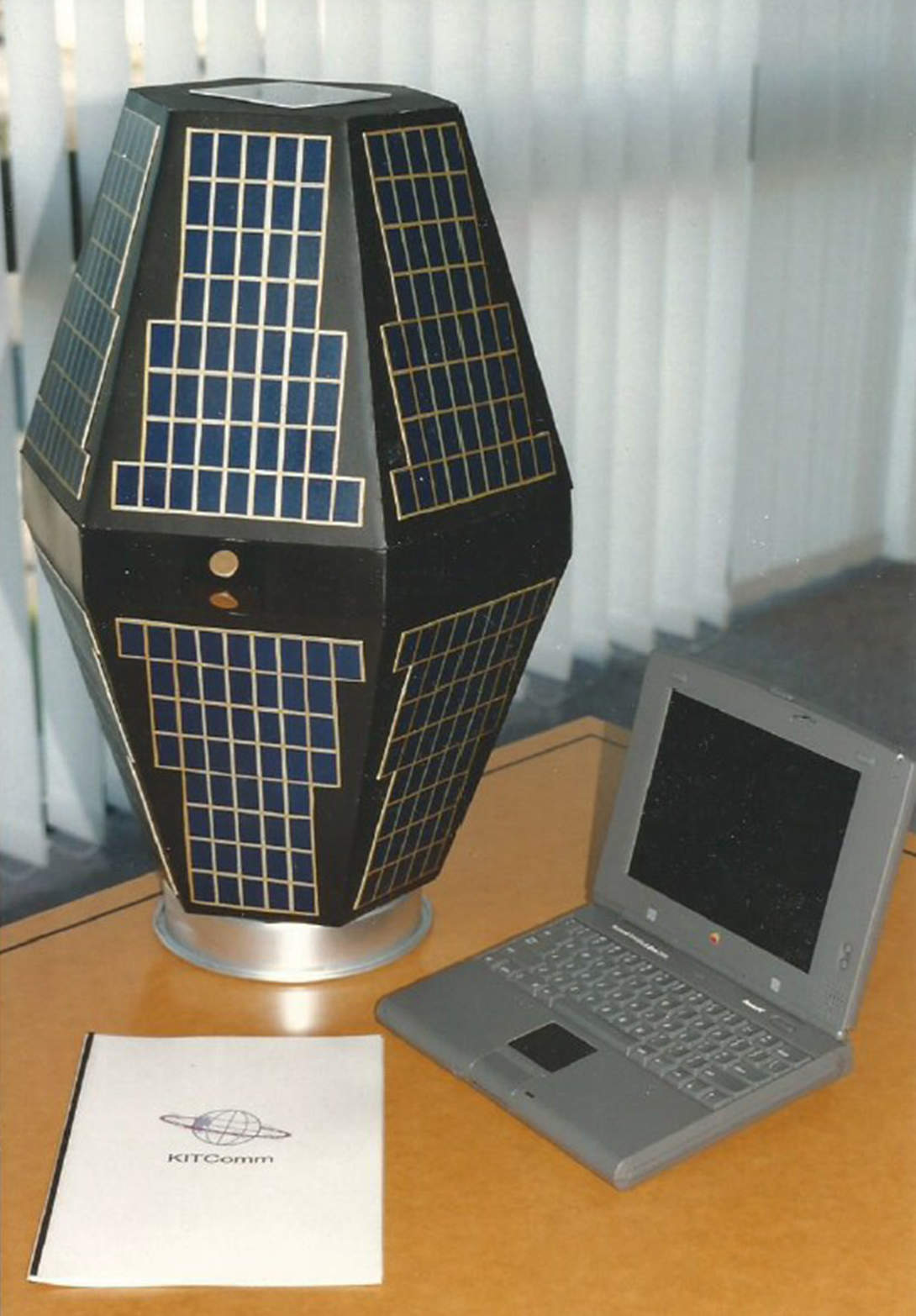 |
Circa 2004, Australian company KITComm Satellite Communications hoped to launch a constellation of 21 small satellites in three polar-orbiting-planes to provide global telecommunications and geolocation services using L-band frequencies. |
There were many other aspects to Jeff’s career – such as his work with the Board of Engineers Australia, developing standards with the International Telecommunications Union and leading the Australian delegations at international conferences into global radio spectrum allocation.
When Jeff turned 85, we hosted a party for him and asked if he’d like to invite KITComm owner, who by that time was a friend, and Jeff quickly remarked that Keith didn’t know he was that old!
In 2019 at the 50th anniversary of Apollo 11 moon landing, Jeff thoroughly enjoyed catching up with the original 1963 Tidbinbilla engineering team.
 |
Five members of the original Tidbinbilla team. L to R – Keith Brockelsby, Clive Jones, Bruce Window, Jeff Newnham, John Heath. Photo by Louise M at the Apollo 11 50th luncheon, Southern Cross Club, Woden, Canberra, 21 July 2019. |
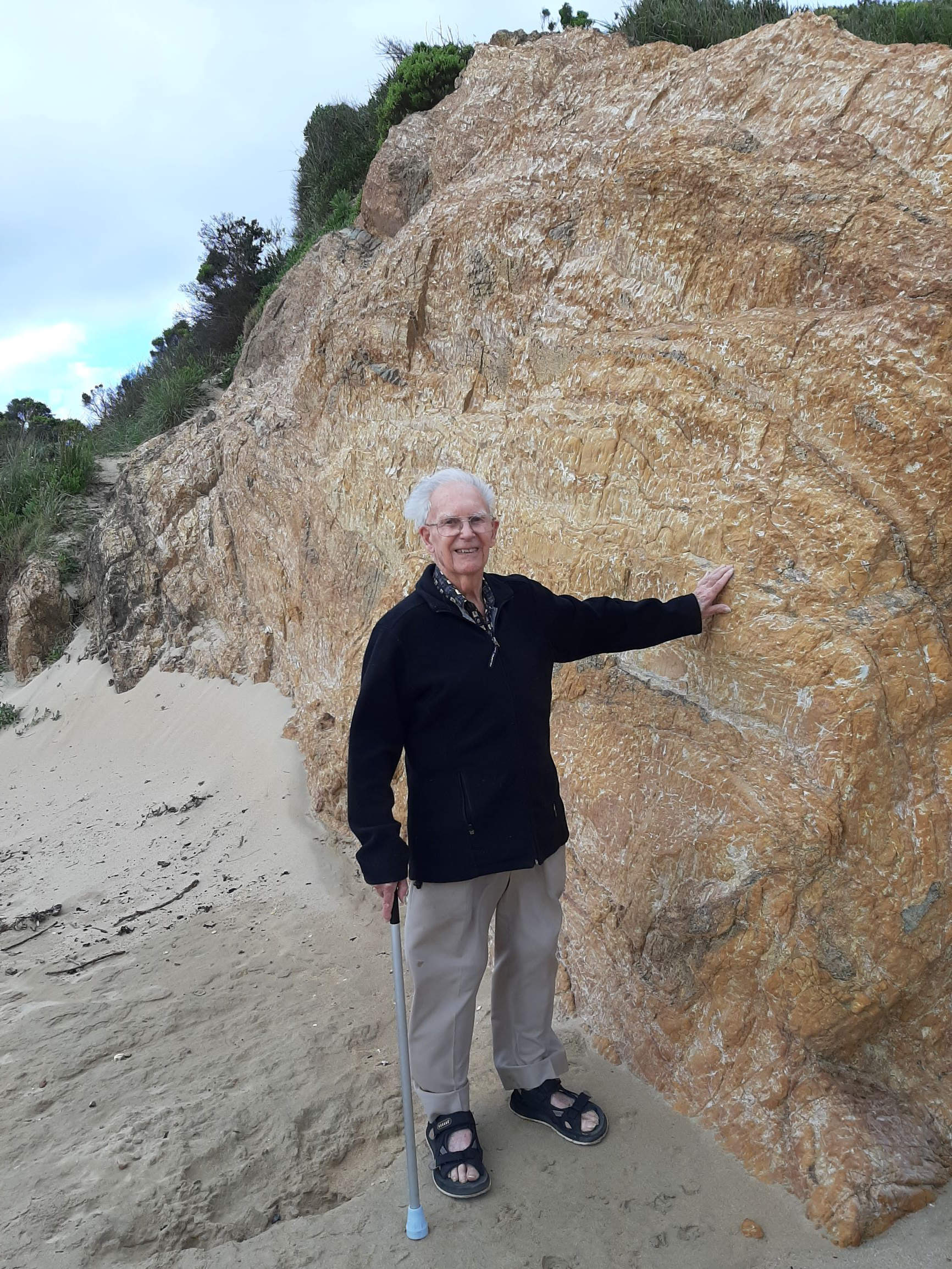 |
Jeff at 93 in 2020 – on a 1.4km walk up Melville Point, including up a steep gradient and over soft beach sand. |
 |
Jeff – with his beloved Max in 2022. |
At the time of his passing, Jeff had been a member of the Institute of Engineers for 52 years; as well as a National Space Society Life member.
Jeff was very family-oriented, and loved when the whole family joined him and Wendy at their coast house. When he made a friend, it was a lasting friendship.
If he wanted to be remembered I think he would just like to thought of as a happy friendly person. Anyone who knew him would agree.
Vale David ‘Jeff’ Newnham.
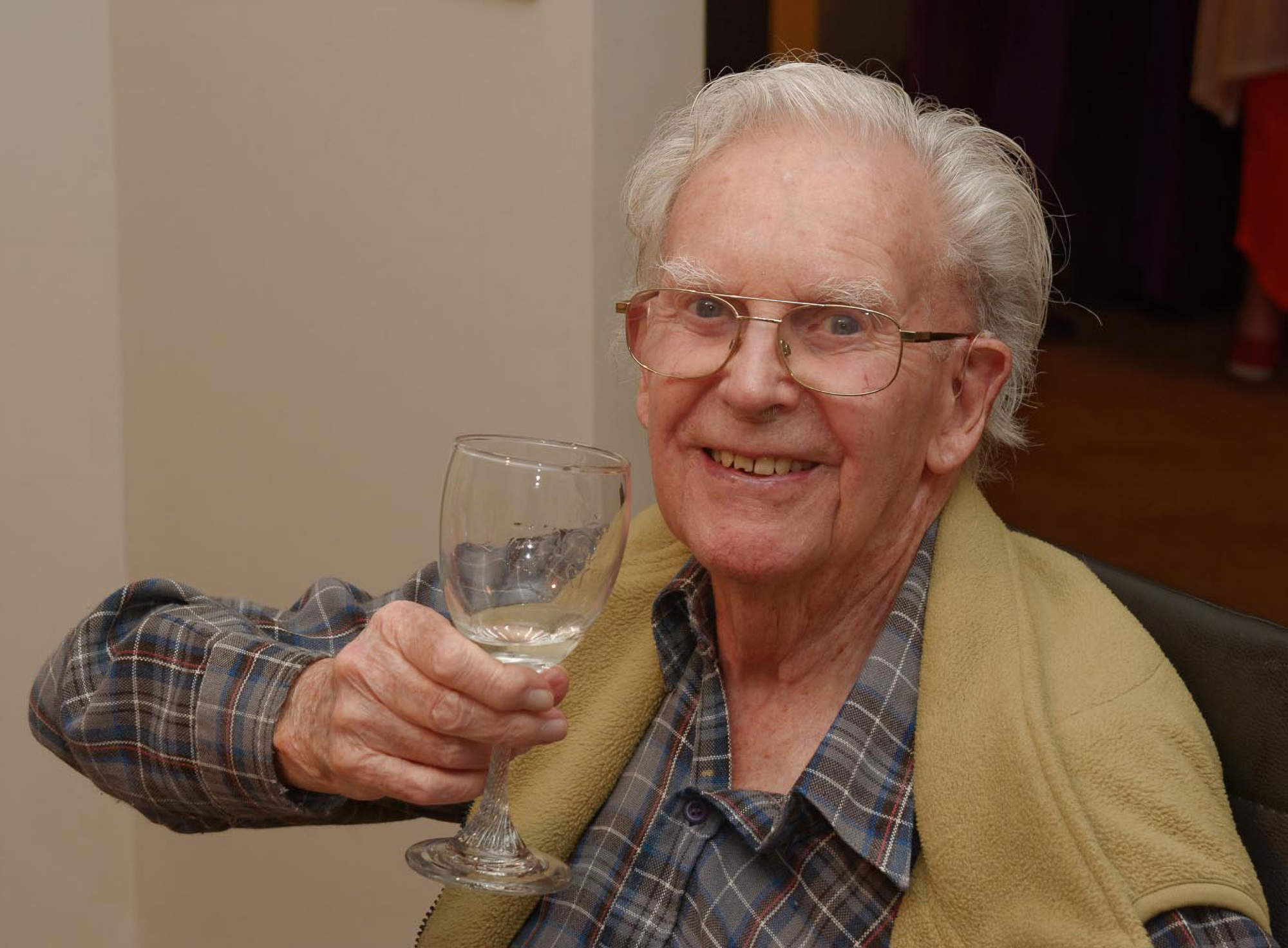 |
Jeff on his 94th birthday after watching his acrobat/circus granddaughter and grandson-in-law perform. |
___________